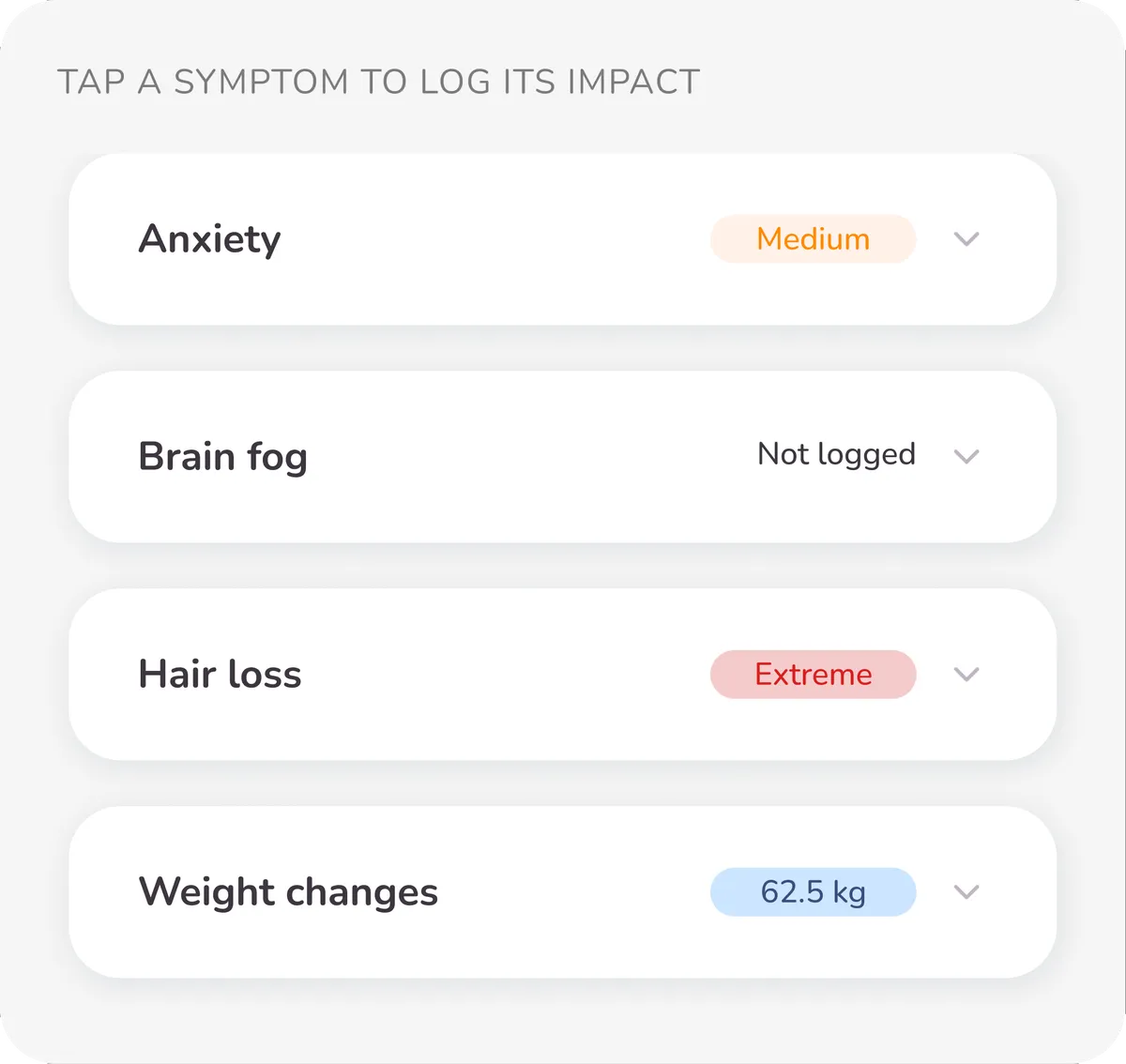

Choose your symptoms
Every condition is different, and so are you. Follow the symptoms you care about, from fatigue and joint pain to brain fog, and leave out the ones that don't apply. Your tracker, your terms.
For anyone living with an autoimmune condition who wants to understand their symptoms, not just get through them.
Join the waitlist
Living with an autoimmune condition means keeping track of a hundred small things, the fatigue, the flare, the day the pain shifted, and somehow remembering them all by your next appointment.
Kinu's symptom tracker is the calm place to set them down. It takes seconds a day, works on the low-energy days, and quietly builds into a record of how you've really been. So instead of scrambling to remember, you walk in with the full story, in your own words.
Every condition is different, and so are you. Follow the symptoms you care about, from fatigue and joint pain to brain fog, and leave out the ones that don't apply. Your tracker, your terms.
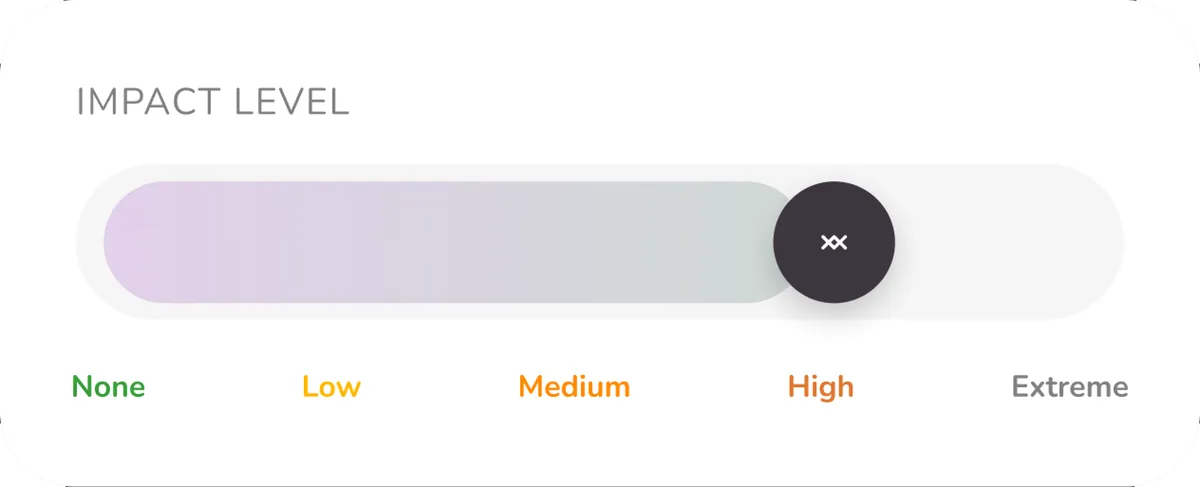
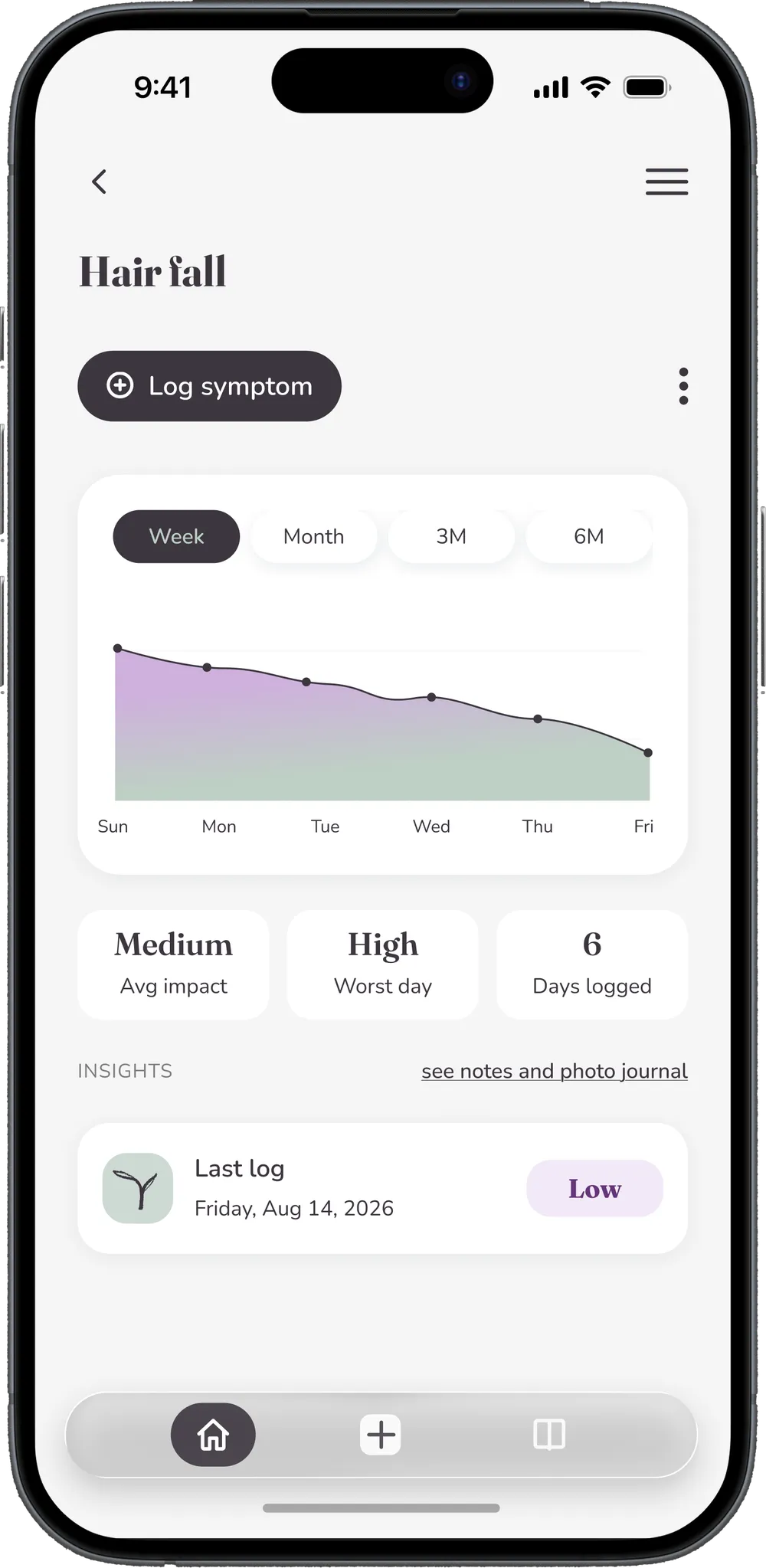
Give each symptom a quick severity rating, so a rough day and a manageable one look different when you look back. A simple way to capture something that's hard to put into words.
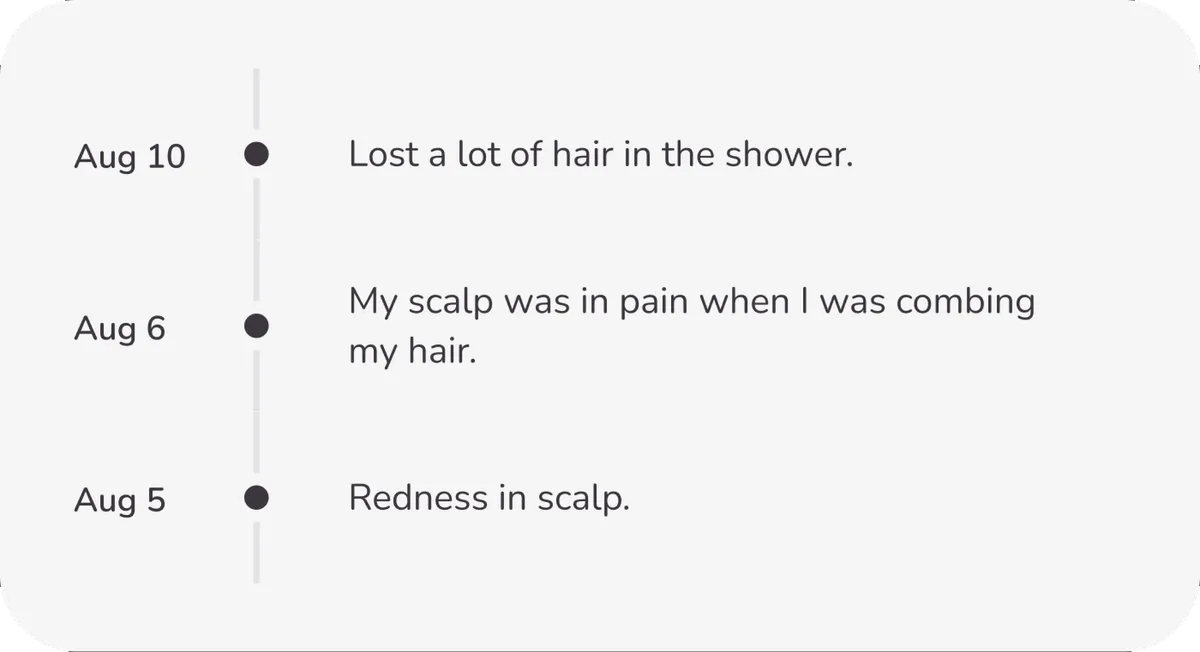
Some things don't fit into a rating. Jot down what happened, what you ate, or how you slept, so the details are there when you need them.
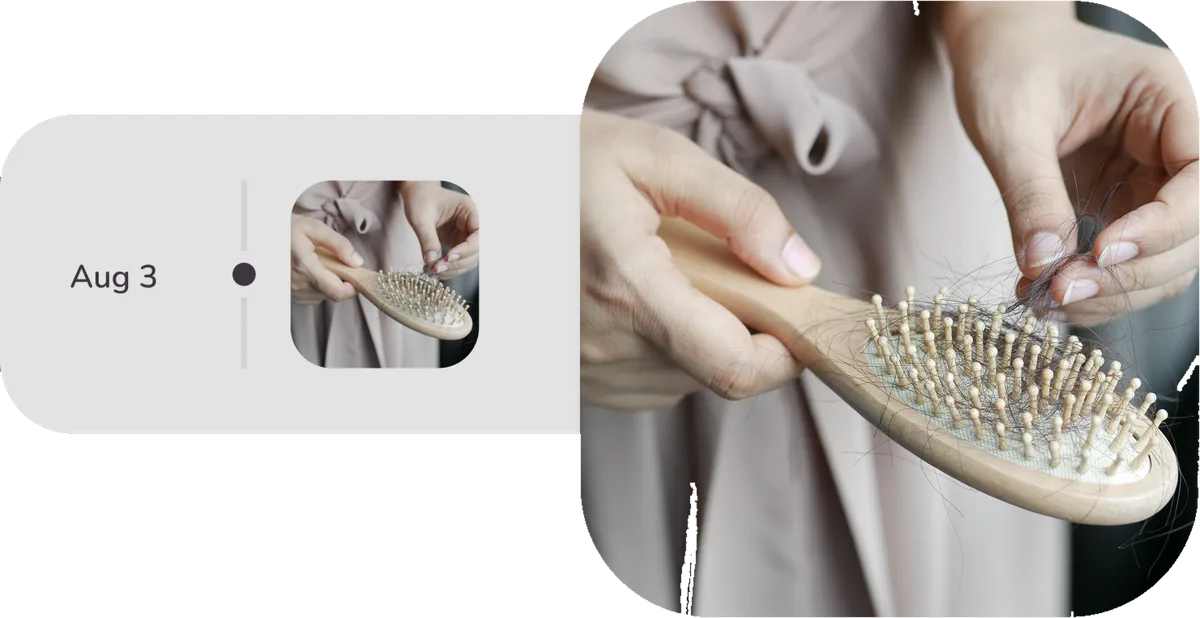
A rash, a swollen joint, a meal. Snap a photo and keep it with your notes, so you can show what changed instead of trying to describe it.
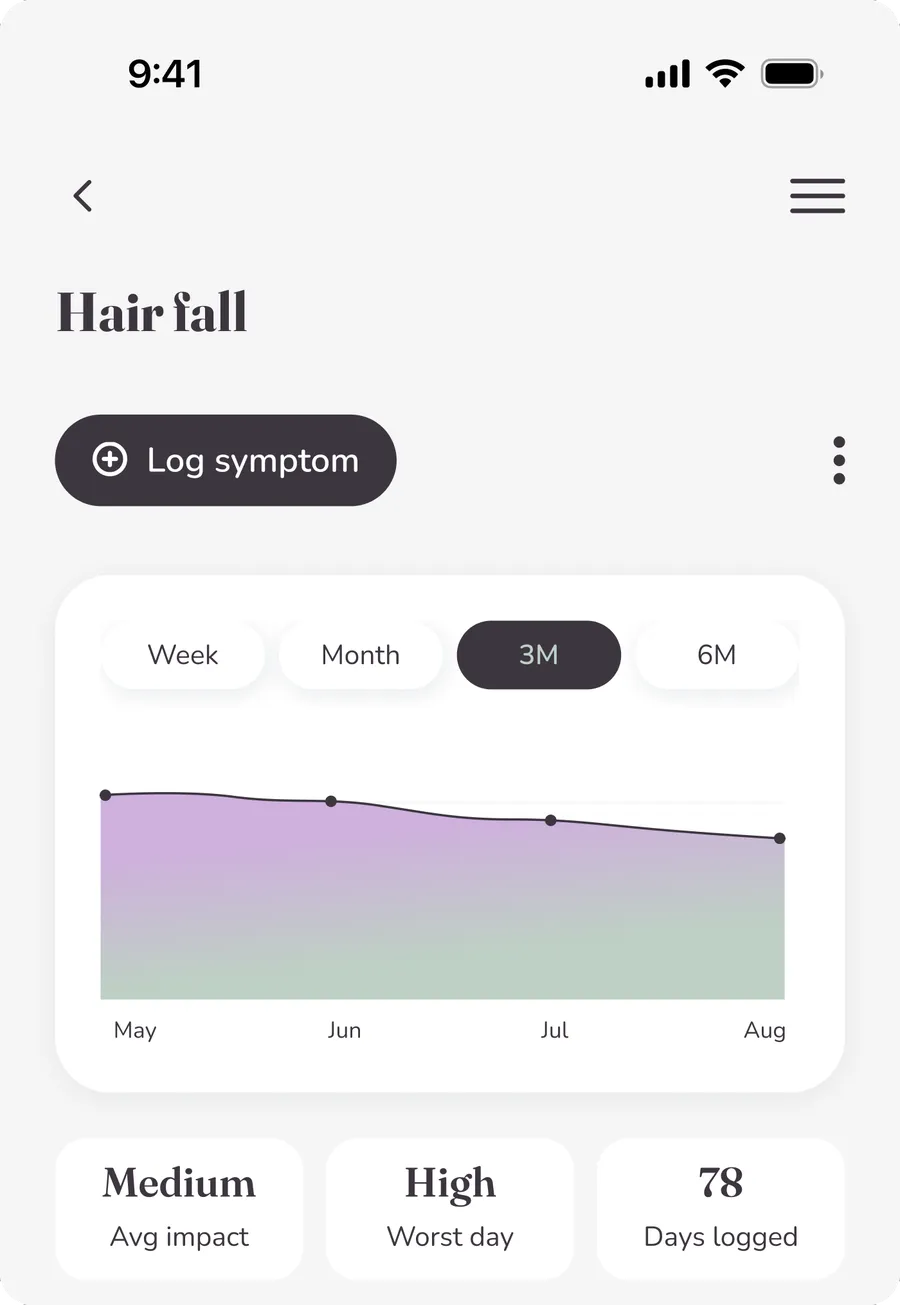
Kinu gathers your check-ins into simple week and month views, so you can notice your own patterns over time. You do the spotting. Kinu just makes it easy to see.
Here's everything else Kinu keeps in one place.
Keep your lab reports and test dates together, so nothing lives in a drawer.
Track what you take, and get gentle reminders that fit your day.
See how you're doing across weeks and months at a glance.
Turn what you've logged into a clear summary you can share.
You don't need to track everything, or get it perfect. Just start with today, go at your own pace, and let the small check-ins add up to a clearer picture over time.
Join the waitlist
Symptoms that feel unforgettable in the moment tend to blur together by your next appointment. Tracking them gives you a clear record of how you've really been, so you can see your own patterns over time, describe what's changed in your own words, and make the most of your limited time with your doctor. It's less about numbers and more about not carrying it all in your head.
Open the app and log how today felt in a few taps. Choose the symptoms that matter to you, rate how severe they feel, and add a note or photo if you'd like. It takes seconds, so it's easy to keep up even on hard days.
You decide. Kinu lets you follow the symptoms that come with your condition, like fatigue, joint pain, brain fog, rashes and more, and you can change them anytime as things shift.
Yes. Alongside each check-in you can add a free-text note and a photo, so the details that are hard to describe, like a rash or a swollen joint, are there when you need them.
A notebook or spreadsheet works, until you're tired, mid-flare, or trying to find last spring's notes. Kinu is built for how you actually live: logging takes a couple of taps, your severity ratings turn into simple trends you can see at a glance, and your notes, photos and lab results all stay in one private place. When it's time for an appointment, it's already organized into a summary you can share.
No. Kinu is a wellness and self-tracking app. It doesn't diagnose, interpret, or give medical advice. It helps you keep track of how you feel and prepare for your care. It's a support tool built to complement your care, not replace it. Always consult a qualified healthcare professional about your health.
Yes. Kinu turns what you've logged into a clear summary you can bring to your appointment or share with your care team, so you don't have to rebuild the story from memory each time.
Yes. We follow strict EU data-privacy standards (GDPR), and your data is yours to export or delete whenever you like.
We use different categories of cookies to run and improve the site. Information on these categories and their purposes are described below. For more information please see our Privacy Policy and Cookie page.
Needed for the site to operate securely and to remember your choices, and therefore do not require your consent.
These cookies help us understand how our website is engaged with, such as usage statistics, so we can improve it.
These cookies help us deliver ads and marketing content to you, measure how they perform, and show more relevant ads on other platforms.